After the Storm
Post cyclone recovery of threatened single-watercourse flora in the Wet TropicsThe Wet Tropics World Heritage Area is one of the most floristically diverse regions in the world supporting over 2800 plants from 221 families. The area is noted for its topography, diverse vegetation communities, high endemism, and large numbers of threatened plant species.
In 2023, high water flows and scouring caused by Tropical Cyclone Jasper devastated the habitat of many of these threatened plants, creating uncertainty about the status and condition of remaining populations.
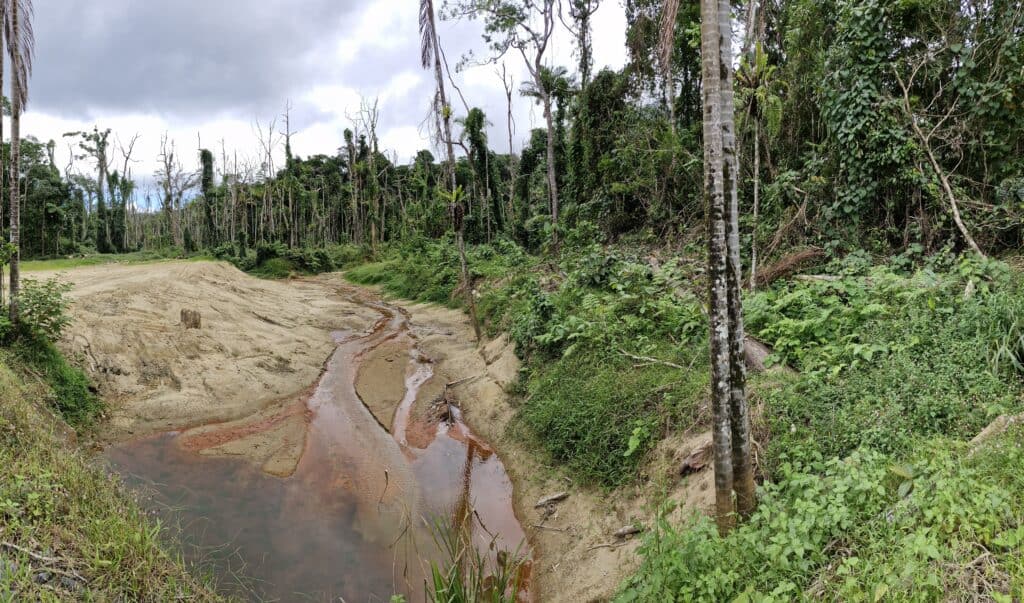
Cyclone damage to a creek near Cape Tribulation. Credit: Paul Donatiu
Plant Conservation Australia is excited to announce this new 2 year project which will collect data to assess the level of impact of Tropical Cyclone Jasper on 16 threatened plants endemic to single watercourses (ie. they only occur along one stream or creek in the whole world) in the Wet Tropics region and prioritise these species for on-ground management and recovery actions. This assistance is being provided through the jointly funded Commonwealth-State Disaster Recovery Funding.
The first four months of this Project (Stage 1) comprises botanists from the Australian Tropical Herbarium (ATH) completing targeted surveys of the 16 species to document the surviving populations and their viability and producing new herbarium records.
Stage 2 will include the development and implementation of riparian management plans, with targeted habitat remediation and recovery actions for the priority single watercourses endemic species. It will also provide educational and training opportunities to support on-going monitoring, stewardship and species recovery, including increasing awareness of the impacted threatened species within the local communities, Traditional Owner groups and local government areas that contain natural populations of the target species.
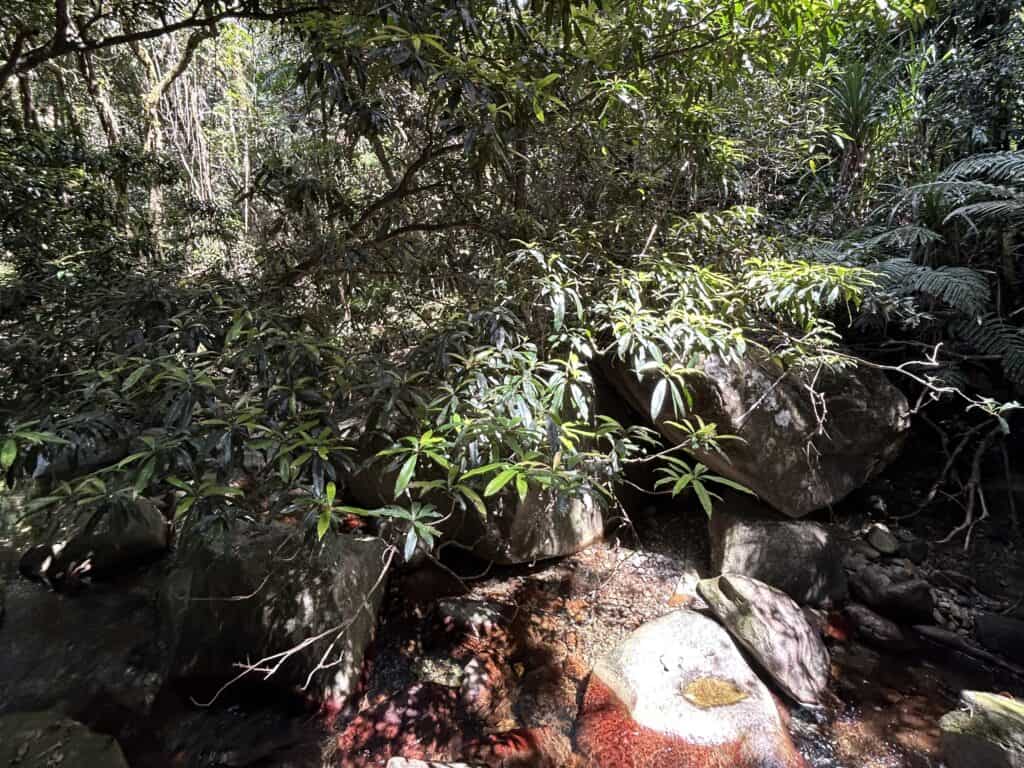
Xanthostemon formosus habitat. Credit: Marine Deliens
Key project stakeholders include:
- Australian Tropical Herbarium
- Queensland Herbarium
- Jabalbina Yalanji Aboriginal Corporation (YAC), Eastern Kuku Yalanji people
- Queensland Parks and Wildlife Service and Partnerships
- DETSI Threatened Species Operations
- Rainforest Rescue
- Wet Tropics Management Authority
The focus of the project will be on assisted natural regeneration (ANR), that is the removal of transformer weed species that inhibit natural regeneration (particularly exotic vines). Due to the scale of potential impacts and works required for complete rehabilitation and restoration, not all weed species will be targeted. ANR is a rehabilitation strategy post-disturbance that builds upon the regenerative capacity of rainforest species (from either soil seedbanks or their ability to resprout), retains genetic integrity and facilitates succession. It also targets the management of invasive species that inhibit regeneration and minimises and directs interventions such as plantings. Where plantings are required, as identified in riparian management plans (including the species required), stem density will be based on reducing weeds, facilitating canopy cover, reducing maintenance, and starting the process of restoring ecological function.