Plenary Speakers
Sustaining Diversity
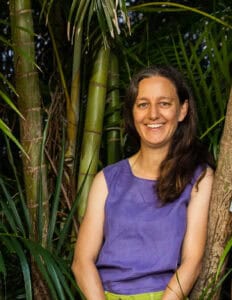
Dr. Rachael Gallagher
“Into the wild: addressing plant extinction through establishment of new plant populations”
Rachael Gallagher is a plant ecologist and conservation biologist. She runs a research program at the Hawkesbury Institute for the Environment at Western Sydney University investigating plant diversity and adaptation, including experimental and field studies of plant responses to key threatening processes such as climate change and fire. Rachael’s research draws on national and international initiatives on plant traits and geographic ranges, several of which she contributes to directly as co-curator of the national AusTraits plant database. She uses these rich sources of data to inform continental and global scale studies in plant biogeography and conservation.
Rachael has worked in plant science since 2004, initially at the National Herbarium of NSW and subsequently as an Australian Research Council Early Career Research Fellow (DECRA 2017-2021) and Future Fellow (2026-2030). She is a current member of the Commonwealth of Australia’s Threatened Species Scientific Committee (TSSC) and previous Deputy Chair and member of the NSW TSSC (2016-2021).
Over the last three decades, vast international resources have been committed to conservation seed banking, to great success. Seed bank collections have grown rapidly since the millennium and seeds and plant germplasm are now routinely stored to safeguard species against extinction. Yet seed banks were never intended to be a ‘final stop’ along the road to recovery for plant species. Currently, when we do reintroduce or translocate plant populations, failure rates associated with their establishment can be unacceptably high. We also often do not know where to situate new plant populations relative to their historical distributions, given immense changes in climate and land use. New science is therefore needed to improve and intensify the strategic reintroduction and establishment of plant populations to the landscape.
In this talk, I will outline gaps in ecological and conservation knowledge that hamper current reintroduction success, such as a lack of a comprehensive list of at-risk species and explore solutions – including new engagement with landholders and practitioners. I will also discuss how we might use emerging financial market mechanisms to fund initiatives that reduce plant extinction risk by establishing new populations.
Stay tuned here for the latest updates, follow us on Facebook, or subscribe to our E-newsletter.
Meanwhile, you can view presentations from our last conference held in Toowoomba and watch delegate reactions and closing thoughts here.