Key Speakers
Keynote Speaker
Dr. Rosemary (Ro) Hill
“Protecting the Daintree lowlands: reflections on conservation work over five decades”
Dr Rosemary (Ro) Hill is an internationally recognised expert in the science of ecosystem governance and multiple knowledge systems for sustainability, including biodiversity futures, climate change adaptation and how indigenous knowledge can inform resilience. She gained extensive experience in systems-thinking, transdisciplinary applied science, and in cross-cultural research with Indigenous peoples globally as a Senior Principal Research Scientist with CSIRO until 2022. She has published more than seventy peer-reviewed papers on these topics. She is currently an adjunct Professor with James Cook University. Ro is a member of the IUCN Commission on Environment Economic and Social Policy, the World Commission on Protected Areas.
The tropical lowland forests north of the Daintree River are recognised today as an extraordinary sanctuary of unique wildlife¬—including plants with near-basal lineages reflecting evolutionary heritage from Gondwana. When I acquired a block of unlogged forest there in 1979, the invasion hypothesis (that the rainforests came from Asia and were not biologically irreplaceable) was still dominant. Bulldozers cleared the forest with little protest. Today we understand that the wet tropics is the second-most irreplaceable natural World Heritage site globally, and multiple organisations, including the Wet Tropics Management Authority, Jabalbina Yalanji Aboriginal Corporation, Rainforest Rescue and others are focused, on its protection.
In this talk I share a personal reflection on the phases of conservation work that have contributed to this turn-around. I discuss how and why protection through private land acquisitions changed to campaigning for government regulatory actions ultimately leading to World Heritage listing in 1988, and subsequent planning controls on private land in 2006. Debates about the impacts of Aboriginal burning and climate change on the rainforests led to my collaborative doctoral research that revealed a world of extraordinarily fine-scale management of plant distribution. Conservation is now understood to require First Nations rights and roles in management of Country, embedded in multi-scalar governance that links with global drivers – e.g. stopping greenhouse gas emissions while promoting cultural burning. My talk will finish with reflections on how to meet key challenges that confront our block of forest today – invasive species (myrtle rust) and extreme weather events (Cyclone Jasper).
Dinner Speaker
Mike Berwick
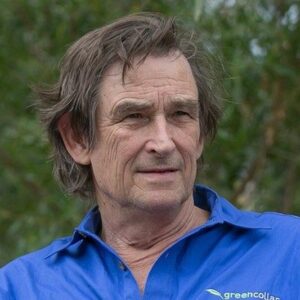
“Restoration at scale: politics, planning and money”
Mike Berwick AM, BSc (vet).
Mike has been a green activist, co-owner and editor of the local Douglas Shire paper, media advisor to the federal minister for the environment, Mayor of Douglas Shire for 5 terms (1991 – 2008) and farmer. He has been Chair of, or director on, a number of regional, state, and national bodies advising ministers, CSIRO and industry groups on environment, agricultural, natural resources and waste management. Mike was awarded an AM for his contribution to conservation and local government and made an Honorary Fellow of the Planning Institute of Australia. He currently works with GreenCollar on environmental markets.
Plenary Speakers
Sustaining Diversity
Dr. Rachael Gallagher
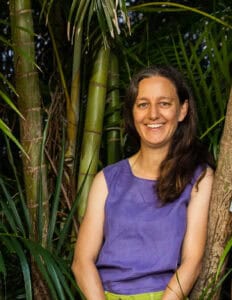
“Into the wild: addressing plant extinction through establishment of new plant populations”
Rachael Gallagher is a plant ecologist and conservation biologist. She runs a research program at the Hawkesbury Institute for the Environment at Western Sydney University investigating plant diversity and adaptation, including experimental and field studies of plant responses to key threatening processes such as climate change and fire. Rachael’s research draws on national and international initiatives on plant traits and geographic ranges, several of which she contributes to directly as co-curator of the national AusTraits plant database. She uses these rich sources of data to inform continental and global scale studies in plant biogeography and conservation.
Rachael has worked in plant science since 2004, initially at the National Herbarium of NSW and subsequently as an Australian Research Council Early Career Research Fellow (DECRA 2017-2021) and Future Fellow (2026-2030). She is a current member of the Commonwealth of Australia’s Threatened Species Scientific Committee (TSSC) and previous Deputy Chair and member of the NSW TSSC (2016-2021).
Over the last three decades, vast international resources have been committed to conservation seed banking, to great success. Seed bank collections have grown rapidly since the millennium and seeds and plant germplasm are now routinely stored to safeguard species against extinction. Yet seed banks were never intended to be a ‘final stop’ along the road to recovery for plant species. Currently, when we do reintroduce or translocate plant populations, failure rates associated with their establishment can be unacceptably high. We also often do not know where to situate new plant populations relative to their historical distributions, given immense changes in climate and land use. New science is therefore needed to improve and intensify the strategic reintroduction and establishment of plant populations to the landscape.
In this talk, I will outline gaps in ecological and conservation knowledge that hamper current reintroduction success, such as a lack of a comprehensive list of at-risk species and explore solutions – including new engagement with landholders and practitioners. I will also discuss how we might use emerging financial market mechanisms to fund initiatives that reduce plant extinction risk by establishing new populations.
Biosecurity, Invasive Threats and Post-invasion Challenges
Barbara Waterhouse
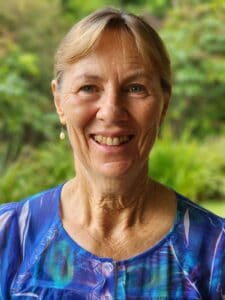
“Stemming the tide: biosecurity and conservation challenges in northern Australia.”
Barbara Waterhouse PSM worked as a botanist with the Department of Agriculture (DAFF) Northern Australia Quarantine Strategy from 1990 to 2023. In this role she worked widely across northern Australia and in neighbouring Papua New Guinea, Indonesia and the Solomon Islands. She contributed to early detection and reporting of weeds and pests of biosecurity concern, identification of host plants, biosecurity responses for new weeds, Asian honey bees and exotic fruit flies, and training of remote biosecurity staff and ranger groups. In ‘retirement’ she still has an active interest in invasive species, an adjunct role at the Australian Tropical Herbarium and is a member of the Queensland DETSI Species Technical Committee (Threatened Species).
Long term geographic isolation, climatic stability and ancient, nutrient poor soils have shaped Australia’s unique biota. Isolation has also limited the arrival of invasive organisms that are common elsewhere, although this protection is increasingly challenged by global trade, rapid transport, population growth and human movement.
Northern Australia presents a different story. For millennia it has been a region of biotic exchange across the Sunda–Sahul Convergence Zone (Joyce et al. 2020). Proximity to neighbouring landmasses, periodic land bridges, monsoonal weather systems and migratory animals have created ongoing opportunities for the arrival of new species. The flora and fauna of the region remain incompletely documented due to remoteness, difficult access and a shortage of taxonomic specialists. This natural permeability complicates the distinction between native, naturalised and introduced taxa, with direct implications for biosecurity and plant conservation, especially in sensitive northern ecosystems.
Across Australia, biosecurity threats are mitigated through regulation, inspection and surveillance, particularly near international ports and airports. However, the presence of ‘unregulated pathways’ in northern Australia has required additional measures to support prevention and early detection of new incursions, particularly in remote coastal and island communities.
My talk will present examples of current threats and pathways for new introductions into northern Australia, with a focus on the Torres Strait region, drawing on over 30 years of experience in early detection biosecurity programs. I will also outline challenges for biosecurity and conservation arising from mistaken identity, taxonomic uncertainty, rigid application of biosecurity precepts and potential unintended consequences of well-intentioned responses.
Restoring Balance
Prof. Susan Laurance
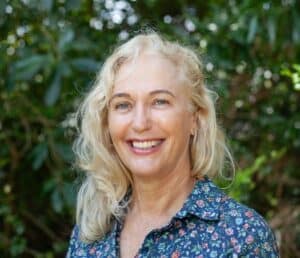
“Landscape, species and climate: understanding the dynamics of tropical forest recovery and restoration”
Professor Susan Laurance is an ecologist who studies the effects of land use and climate change on tropical forest and animal communities. Her research focuses on identifying what makes species vulnerable to extinction, how they contribute to ecosystem function and the specific threats of human activities. Susan has approached these questions from different scales from trees to forests and across most taxa from mosquitoes to mammals. Her research methods range from descriptive field and experimental studies and the application of new technologies. Susan was elected President of the Association for Tropical Biology and Conservation, the largest scientific organisation in the world for studies into tropical ecosystems. She is the Director of JCU Centre for Tropics Environmental and Sustainability Science and a member of the Australian Academy of Sciences National Committee of Ecology, Evolution and Conservation. She has published over 190 papers with >40,000 citations.
The restoration of tropical rainforests is expanding rapidly as governments and land managers seek to reverse biodiversity loss and build resilience to climate change. Yet restoration success depends on ecological processes operating across multiple spatial and temporal scales. Drawing on three complementary studies from Australia’s Wet Tropics, I will explore how landscape context, species selection and climate resilience interact to shape restoration outcomes. First, our analyses of more than 3,000 km² of regenerating rainforest demonstrates that natural forest recovery is driven overwhelmingly by the proximity and size of remnant rainforest rather than land marginality. More than 85% of secondary forest occurs within 1 km of existing rainforest, highlighting the critical role of remnant forests as propagule sources and reinforcing the importance of conserving even relatively small forest patches. Second, using records from more than 465,000 seedlings supplied to restoration projects, we show that restoration plantings are dominated by a relatively small number of species with traits associated with rapid growth, including small animal-dispersed seeds and lower wood density. While this bias may accelerate canopy development, it also raises questions about the long-term composition, persistence and functional diversity of restored forests. Finally, I will present new evidence that tree species differ markedly in their flammability, suggesting that restoration design can influence the vulnerability of recovering forests to increasing fire risk under climate change. Together, these studies illustrate that restoration is far more than simply planting trees. Long-term restoration success depends on conserving remnant forests that facilitate natural regeneration, maintaining functional diversity through thoughtful species selection, and designing plantings that are resilient to future disturbances. Integrating landscape ecology, restoration practice and functional ecology will be essential if tropical forest restoration is to deliver durable biodiversity and climate outcomes.
Collaborations and Culture
Gerry Turpin
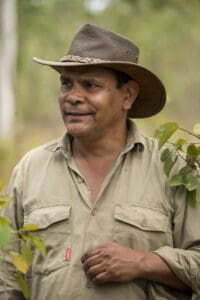
“Restoring Country Through Plants and People: Ethnobotany, Conservation and Collaboration in Australia”
Gerry leads the development of the Tropical Indigenous Ethnobotany Centre (TIEC) in the Australian Tropical Herbarium (ATH) at James Cook University, Cairns. The ATH is a joint venture between James Cook University, CSIRO, and the Queensland Government. He has been employed by the Queensland Government for over 40 years.
Gerry participated in the Queensland Herbarium’s statewide Regional Ecosystem Survey and Vegetation Mapping Project, including carrying out that project in the Channel Country, south-west Queensland for several years before transferring to the Australian Tropical Herbarium.
In 2016, he was a member of the Indigenous Experts Roundtable in reviewing Queensland’s Biodiscovery Act (2004). The Roundtable recommended important changes which were adopted and in September 2020, the Biodiscovery and Other Legislation Amendment Act 2020 reformed the Act to include legal protections for the use of First Nations peoples’ traditional knowledge in biodiscovery to improve the alignment with international standards such as the Nagoya Protocol.
Gerry’s current work as a Senior Ethnobotanist entail travelling to Indigenous communities to engage and foster relationships, and to record and document traditional plant knowledge. Gerry also acts as a bridge between Indigenous Biocultural Knowledge and Western Science to bring researchers and other organisations to partner with traditional owner groups in collaborative research.
This presentation outlines the work of the Tropical Indigenous Ethnobotany Centre (TIEC) and the importance of collecting, documenting and preserving Indigenous Biocultural Knowledge (IBK). IBK recognises that everything is interconnected. Plant conservation is therefore not only about protecting species, but also about safeguarding the cultural knowledge, practices, languages and relationships that have sustained them for millennia.
Drawing on TIEC’s work, I will discuss how conserving plants can also restore Country and strengthen IBK. The presentation will explore IBK as a conservation tool, including Indigenous fire management and respectful collaboration between Indigenous knowledge systems and Western science. It will also highlight our current bush tucker and bush medicine projects through seed collection, propagation, nursery production and community-based restoration, and explain why ethnobotany matters for healthy ecosystems and living cultural knowledge.
Stay tuned here for the latest updates, follow us on Facebook, or subscribe to our E-newsletter.
Meanwhile, you can view presentations from our last conference held in Toowoomba and watch delegate reactions and closing thoughts here.