Keynote Speaker:
Dr. Rosemary (Ro) Hill
JCU Cairns Institute
Abstract title – “Protecting the Daintree lowlands: reflections on conservation work over five decades”
Dinner Speaker:
Mike Berwick
GreenCollar
Talk title – “Restoration at scale: politics, planning and money”
Plenary Speakers:
Professor Rachael Gallagher
Hawkesbury Institute for the Environment, Western Sydney University.
Abstract title – “Into the wild: addressing plant extinction through establishment of new plant populations”
Barbara Waterhouse
Abstract title – “Stemming the tide: biosecurity and conservation challenges in northern Australia.”
Professor Susan Laurance
Abstract title – “Landscape, species and climate: understanding the dynamics of tropical forest recovery and restoration”
Gerry Turpin
Abstract title – “Restoring Country Through Plants and People: Ethnobotany, Conservation and Collaboration in Australia”
1. Restoration of tropical forests in the Daintree (full day) – Visited Jabalbina Yalanji Aboriginal Corporation Wawu Dimbi Julaymba (Daintree River) lowland tropical rainforest planting project which aims to generate Cassowary Credits through replanting a 2.2ha area of cleared and unused land; ClimateForce Tropical ReGen project regenerating a former organic banana farm in the Daintree rainforest; Madja Boardwalk, had a scenic walk with opportunity to observe botanical diversity (mangrove forests, fan palms, creek systems, rare ferns and epiphytes ) and culture (Madja means rainforest in Kuku Yalanji language); and Rainforest Rescue – their native nursery and the McDowell Oxbow Wetland (lower Daintree) and NightWings Restoration Projects. Coordinated by the Wet Tropics Management Authority (WTMA).
2. Threatened plants of the Daintree (full day) – An introduction to some of Australia’s most threatened tropical rainforest flora in their natural habitat. Visited prime examples of complex mesophyll vine forest along several watercourses and boardwalks in the Cape Tribulation area (including Madja Boardwalk), and met species of threatened flora such as Gardenia actinocarpa (Endangered), Syzygium glenum (Endangered) and Xanthostemon formosus (Endangered), which are known from one or very few sites in the Daintree. Also spotted other interesting characters such as the Idiot Fruit (Idiospermum australiense), tassel ferns, native bamboos, and at least a dozen mangrove species, and experience the impact of key threatening processes such as myrtle rust dieback – Limit of 25 registrations. Coordinated by the Australian Tropical Herbarium. Sponsored by the Hawkesbury Institute for the Environment.
3. Ngadiku Dreamtime Walk at Mossman Gorge (half day) 9am to 1.30pm – A 90 minute tour conducted by the local Indigenous people at Mossman Gorge Cultural Centre, followed by self-guided walks on 2.4km of walking tracks and boardwalks in the Gorge. The Ngadiku Dreamtime Walk began with a traditional ‘smoking’ ceremony to cleanse and ward off bad spirits. Next, our guide led us on a meandering stroll through stunning, lush rainforest, demonstrating traditional plant use, identifying bush food sources, and providing an enchanting narrative of the rainforest and their special relationship with this unique tropical environment. Discovering traditions like making bush soaps and ochre painting. At the end of the tour the group enjoyed traditional bush tea and damper.
4. Cairns Botanic Gardens (half day) 8am to 2pm – The Cairns Botanic Gardens are a tropical paradise, renowned as one of the best exhibitions of tropical plants in Australia. We explored the beauty of tropical plants, with a focus on the collection of unique Australian natives endemic to North Queensland. We also learned about our great diversity of tropical flora in Australia and the horticulture practices needed to maintain such a diverse and complex collection. Highlights include Tassel ferns, a diverse Coleus collection, endemic trees from around the Australian Wet Tropics and the Aboriginal Plant Use Garden.
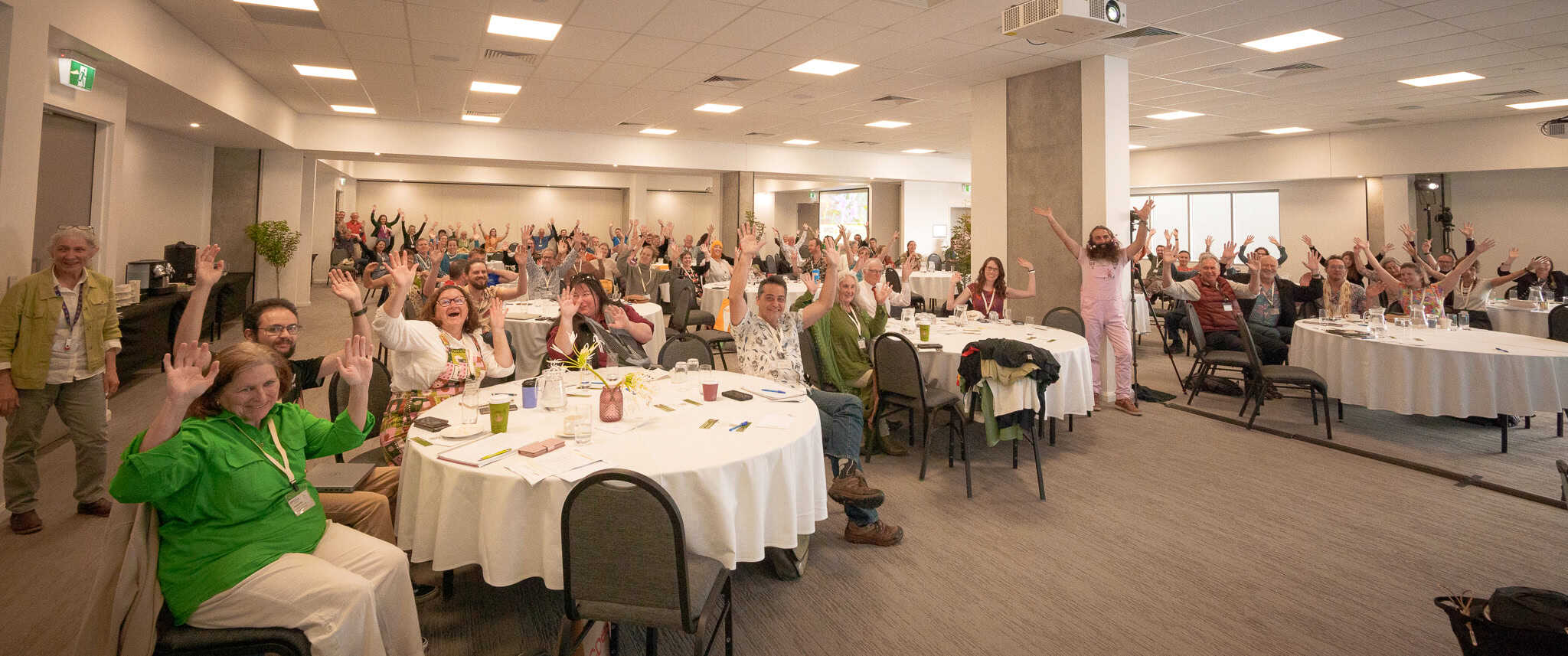
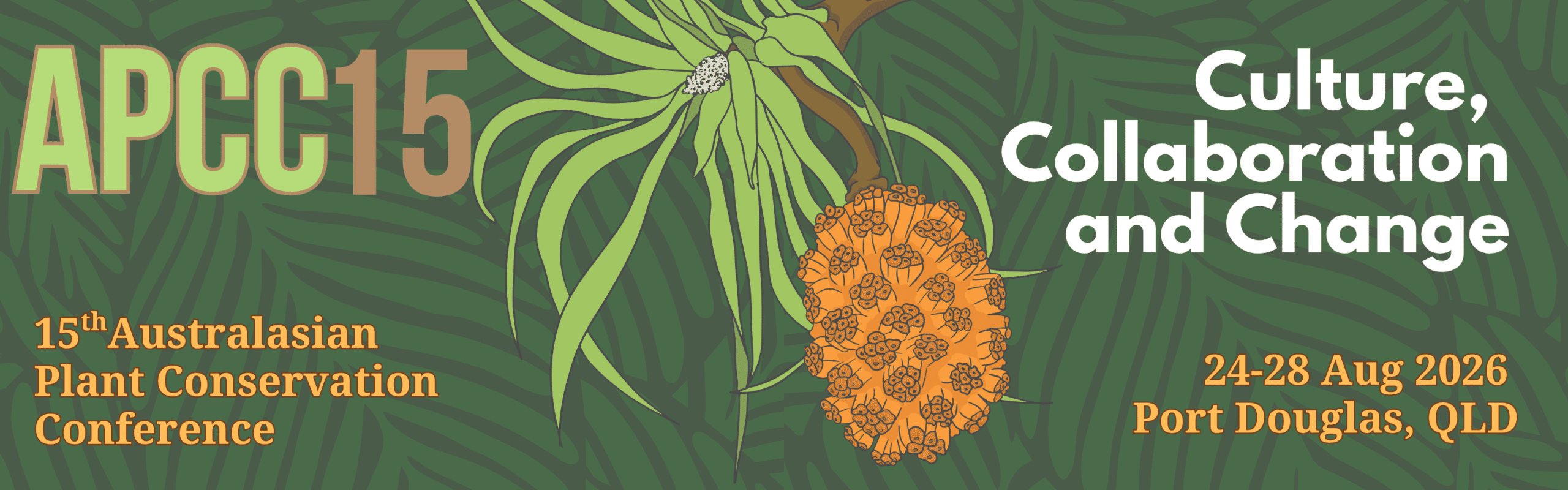
The 15th Australasian Plant Conservation Conference (APCC15) was held at the Port Douglas Community Hall in the Queensland Wet Tropics from 24-28 August 2026.
With the overall theme ‘Plant Conservation: Culture, Collaboration and Change’ APCC15 explored these three spheres of native plant recovery through rainforest restoration partnerships, collaborations with Traditional Owner groups, impacts of climate change induced natural disasters, management of threatened species and communities, and biosecurity threats such as Myrtle Rust.
The conference brought together from across the continent, people researching, working, or volunteering in plant conservation to address the challenges facing Australasia’s spectacular and diverse plant life, through information exchange and sharing best practice approaches.
Plenary Themes – click to expand
Sustaining Diversity
Australia is home to several biodiversity hotspots that are rich in unique flora, many of which are found nowhere else in the world. This plant diversity is impacted by a growing number and magnitude of threats, including more frequent and severe natural disasters driven by climate change. A key problem in modern plant conservation is how to approach research and recovery given the face of these ever-mounting threats and expanding threatened plant lists. Prioritising recovery actions to help sustain this critical genetic, species and community-level plant diversity is essential to the human and broader natural world. This theme will explore current knowledge and approaches for prioritising and managing threats to sustain diversity, while also considering the role of diversity of practice and perspective that is needed for long term plant conservation success.
Restoring Balance
The Australasian region stands at a critical crossroads in the 21st century including the impacts of extreme weather events, a growing ensemble of invasive plant species, pathogens and pests, and addressing the complex intersection of socio-economic pressures like land-use conflicts and managing dynamic environments, requiring adaptive strategies for success. As we reach the midpoint of the United Nations Decade on Ecosystem Restoration, the call to revive the natural systems that sustain us has never been more urgent. Around the world and here at home, communities, organisations and leaders are rising to the challenge—forming powerful partnerships, driving innovation with cutting-edge technologies, and weaving cultural knowledge and respect for Country into the fabric of their efforts. This theme dives into the pressing ecological restoration challenges of our time, spotlighting the daring, practical and inspiring actions of those shaping a brighter future for our planet. Together, we can grow and thrive as #GenerationRestoration.
Collaborations and Culture
Collaboration plays a crucial role in plant conservation, especially in Australasia, where the rich living heritage of Indigenous cultures, community organisations, practitioners and world-class botanic gardens and research institutions offer opportunities for integrating diverse skills, approaches and perspectives. In plant conservation, these collaborations manifest in many ways, including scientific research, ex-situ conservation activities, joint management frameworks for in-situ conservation, on-ground restoration activities and policy development/advocacy. Central to the success of any of these activities is the recognition that Aboriginal and Torres Strait Islander Peoples have stewarded the land and sea for many thousands of years, cultivating Country and creating profound systems of knowledge about plants and the ecosystems they are part of. This theme will explore how collaborations and partnerships, including those between Indigenous and non-Indigenous knowledge holders, systems and cultures, have helped create more resilient and biodiverse ecosystems, strengthened cultural ties, improved social equity, and delivered more effective and inclusive environmental stewardship and plant conservation outcomes.
Biosecurity, Invasive Threats and Post-invasion Challenges
Australia talks a big game about biosecurity, but the pressures of invasive species on our natural environment are steadily increasing. Much of our thinking about environmentally invasive species and their exclusion ‒ or their ‘management’ when exclusion fails ‒ is still based on historical strategies for weeds and some vertebrate animals. These remain important actual and potential threats and need more resources. But we face accelerating threats from pathogens and invertebrate pests, some of them very fast-moving and with broad effects on native biodiversity. This theme will explore how we need to rethink our readiness for invasive species, how we bridge the silos of knowledge and experience between different jurisdictions, departments and disciplines, and how we respond when biosecurity and containment strategies fail.
Program Overview
Saturday 22nd and Sunday 23rd – Pre-conference Rainforest Plant ID Workshop @ the Daintree Rainforest Observatory. Hosted by the Australian Tropical Herbarium.
Monday 24th – Pre-conference workshops @ Port Douglas Community Hall 2-5pm.
Workshop 1: “Assessing the extinction risk of Australian trees” with the IUCN Species Survival Commission (SSC) Australia Plant Specialist Group.
As part of the Global Tree Assessment the IUCN SSC Australia Plant Specialist Group will assess the extinction risk of 518 Australian native tree species not currently on the IUCN Red List. In this workshop an overview was provided of Red Listing, current work towards this goal and our remaining knowledge gaps. There was then an interactive session which aimed to focus on a subset of these species and draw on data or expertise held by participants of the species, their distributions and threats. Participants were acknowledged for their contributions via references in the final assessment and with the opportunity to opt-in to any publications that eventuate from the overall project. Facilitators: Tom Le Breton (University of NSW) and Rachael Gallagher (Western Sydney University).
Workshop 2: “Native Seed Collection and Storage in Tropical Australia“.
Targeted at restoration practitioners and Traditional Owner groups, this workshop was centred around native seed (germplasm) collection and storage techniques for Tropical Australia. The National Seed Bank has expertise in collecting and banking seed in hot humid conditions, and in Traditional Owner engagement. It involved the demonstration of practical seed collection techniques such as field seed banks. Facilitators: Tom North (National Seed Bank), Karen Sommerville (Australian PlantBank) and Rainforest Rescue.
Monday 24th – Welcome Reception @ Hemingway’s Brewery 5-7pm.
Tuesday 25th, Wednesday 26th and Thursday 27th – All day presentations and workshops @ Port Douglas Community Hall.
Workshop sessions included:
- National gaps and priorities for germplasm collection in Queensland: The ASBP Collections Review 2000-2020 identified ex situ seed banking activity in Queensland as a significant gap in the national network, with many bioregions having few or no plant species with collections secured in a conservation seed bank. How can we address the gap in ex situ conservation in one of Australia’s most floristically diverse states? What are the threats facing Queensland’s flora that an ex situ germplasm conservation program could address, who needs to be involved and how can it be resourced? Led by the Australian Seed Bank Partnership.
- Barriers, successes and prioritisation in ex-situ plant conservation. This was a facilitated session exploring methods of prioritisation currently guiding ex-situ conservation efforts. Participants will bring their own experiences to the table, compare and contrast, and have the opportunity to identify shared and individual barriers, including ways to collaboratively overcome them. Led by the Millennium Seed Bank and National Seed Bank.
- Working on Country. This workshop introduced cultural principles and protocols for people working on Eastern Kuku Yalanji (EKY) Country, including the Daintree rainforest and surrounding land and sea. EKY Country’s high levels of biodiversity and endemism make it a focus of scientific research, offering strong opportunities for partnerships between researchers and Traditional Owners. The workshop was led by EKY Traditional Owners and Jabalbina staff Kallum Clarke and Allira Alvoen provided participants with information about involving EKY Traditional Owners in research, Traditional Owners’ priorities for research and protocols around the sharing of Traditional Ecological Knowledge and intellectual property. Led by Jabalbina Yalanji Aboriginal Corporation.
Wednesday 26th – Conference Dinner @ Chillys Pizza from 7.30pm.
Friday 28th – Field Trips (see Field Trips tab above for more info). All trips travelled on Tropic Wings’ coaches:
1. Restoration of tropical forests in the Daintree (full day).
2. Threatened plants of the Daintree (full day).
3. Ngadiku Dreamtime Walk at Mossman Gorge (half day) 9am to 1.30pm.
4. Cairns Botanic Gardens (half day) 8am to 2pm.
Saturday 29th and Sunday 30th – Post-conference Rainforest Plant ID Workshop, @ Port Douglas Community Hall. Hosted by the Australian Tropical Herbarium.
Thank you to our APCC15 partners:
Gold Partners

Silver Partners



Bronze Partners

Field Trip Partners




Speaker

Venue

Catering

Prize

APCC15 organising committee:
Bob Makinson – Plant Conservation Australia
Jo Lynch – Plant Conservation Australia
Richie Southerton – Plant Conservation Australia
Paul Donatiu – Plant Conservation Australia & Queensland Threatened Plant Network
Darren Crayn – Australian Tropical Herbarium / JCU
John Hodgon – Carpentaria Land Council Aboriginal Corporation
Rowan Shee – Jabalbina Yalanji Aboriginal Corporation (JYAC)
Marine Deliens – Rainforest Rescue
Ellen Weber – Wet Tropics Management Authority
Cadel Boyce – Cairns Botanic Gardens
Teghan Collingwood – Queensland Herbarium & Biodiversity Science DETSI
Caroline Chong – Northern Territory Herbarium
Stay tuned here for the latest updates, follow us on Facebook, or subscribe to our E-newsletter.
Meanwhile, you can view presentations from our last conference held in Toowoomba and watch delegate reactions and closing thoughts here.