Select Page
Native Guava Project – Propagation

Native Guava Project – Propagation

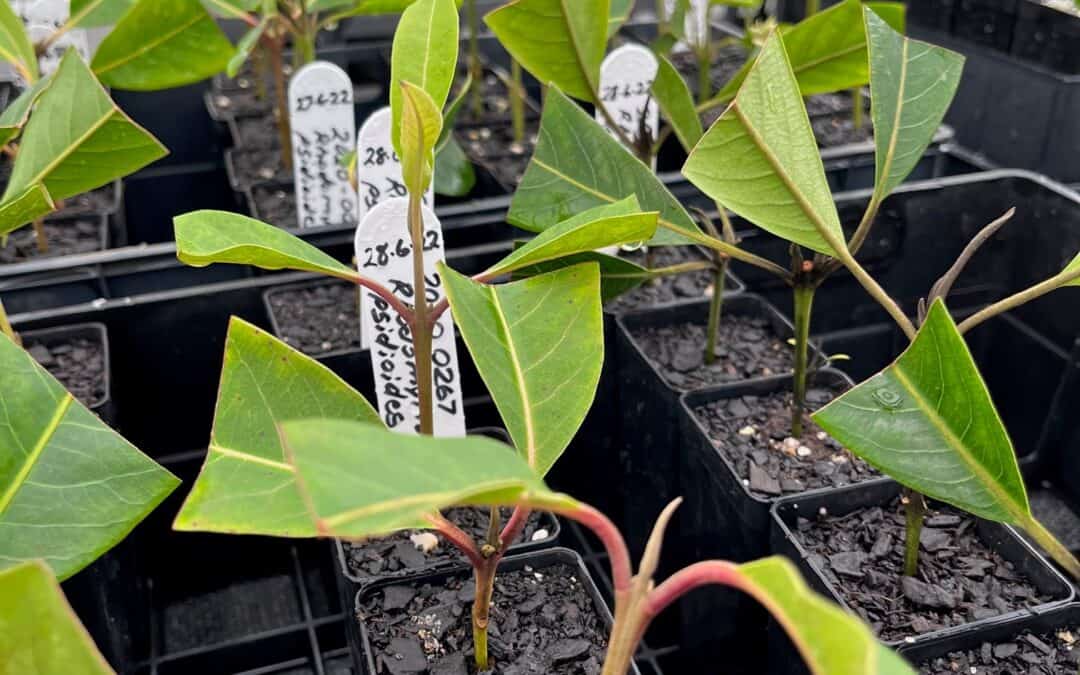
While seed is the easiest and most efficient form of germplasm to store, species such as Native Guava (Rhodomyrtus psidioides) are undergoing such significant decline due to Myrtle Rust that they no longer produce viable seeds for collection. Other species have seeds that are not suited to storage under conventional seedbanking conditions. For these species, cutting propagation is a way of capturing genetic diversity and establishing ex situ collections that provide a measure of insurance against extinction.

Our partners at the Department of Agriculture and Forestry (QLD) and the Australian Botanic Garden Mount Annan (NSW) are establishing new ex situ collections from wild-collected germplasm. These collections provide a source of future propagation material, an accessible collection for research and a way of distributing germplasm across partner organisations as a further measure to establish the species in safe custody.

This project received grant funding from the Australian Government.

Images below:(top) Cutting propagation of Native Guava (Rhodomyrtus psidioides) at the Australian Botanic Garden Mount Annan. Credit: Amelia Martyn Yenson.

Native Guava Video Filming

Native Guava Video Filming

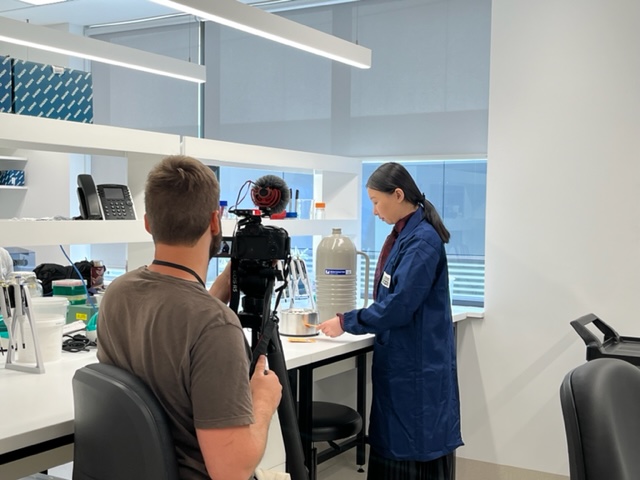
Filming continued for our ‘Safe Custody for Native Guava’ project when our production team visited The Australian Botanic Garden, Mount Annan recently. Peek behind the scenes as they filmed Veronica Viler preparing cuttings in the nursery, Stephanie Chen in the DNA extraction lab and the living collection of Native Guava at the ABGMA nursery. We look forward to sharing the video in early 2023! This project is supported by funding from the Australian Government. Image by Amelia Martyn Yenson
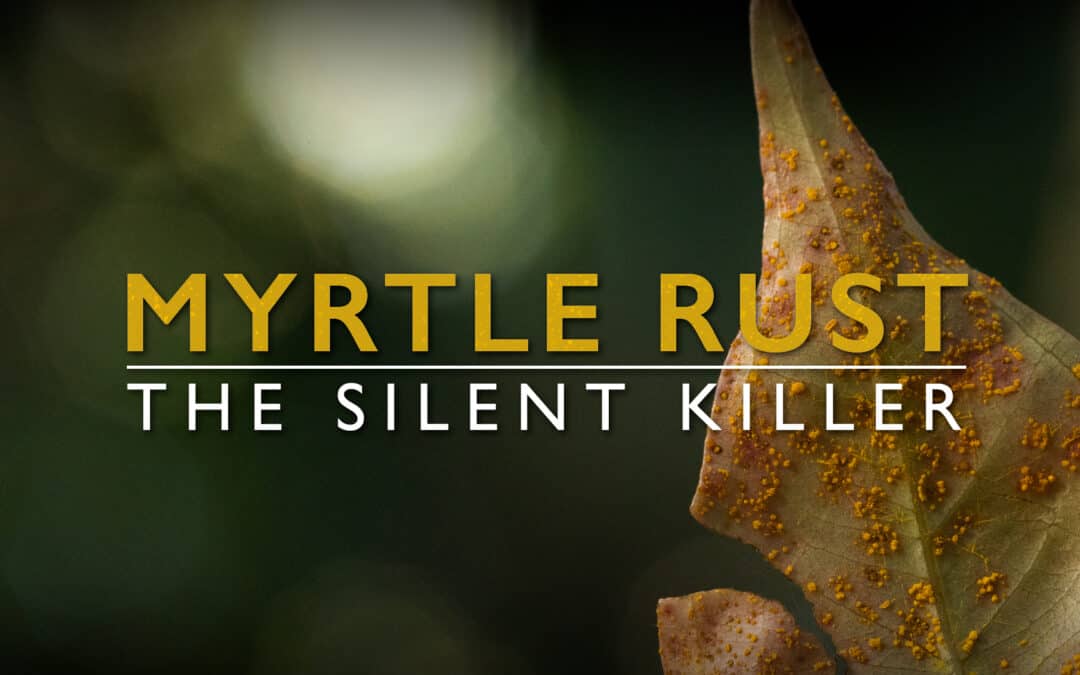
Film Release: Myrtle Rust – the silent killer

Film Release: Myrtle Rust – the silent killer

A new film released this month shares first-hand stories on myrtle rust from indigenous rangers, scientists and landowners. Learn how our precious species and landscapes are under threat and the conservation actions we can take to save them. Watch it here.

This film was a collaborative project led by Queensland Agriculture with support from the Australian Network for Plant Conservation, San Diego Zoo, NSW Government, Butchulla Aboriginal Corporation, and the Plant Biosecurity Science Foundation.

Sneak Peek – Native Guava filming

Sneak Peek – Native Guava filming

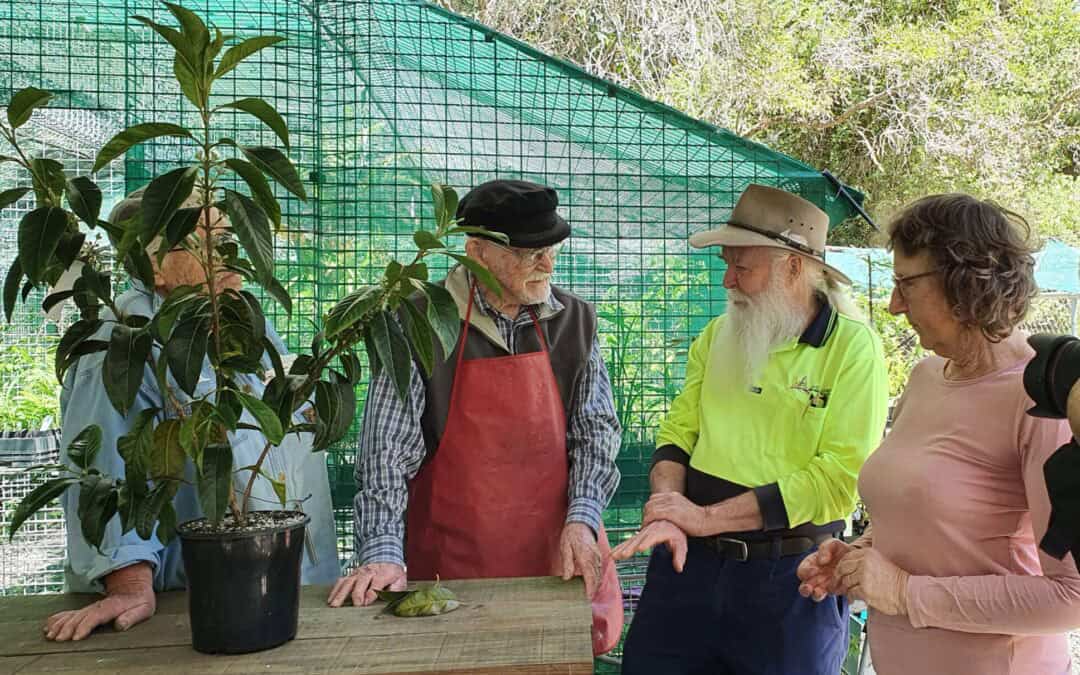
Filming has begun for our upcoming video on the ‘safe custody for Native Guava’ project. This scene was captured at one of our project partner sites, the Lismore Rainforest Botanic Gardens in northern NSW. This project is supported by funding from the Australian Government. Image by Chantelle Doyle

ANPC Donation Drive – Will you help us in the fight against Myrtle Rust?

ANPC Donation Drive – Will you help us in the fight against Myrtle Rust?

From Nov 2022 – April 2023 we are raising funds for our work on Myrtle Rust. Myrtle Rust infects hundreds of species in the Myrtaceae family, which includes our bottlebrushes, paperbarks, lilly pillies, and eucalypts. Since this disease was introduced to Australia in 2010, 5 native plants have jumped straight to the ‘Critically Endangered’ category as a direct result of the disease, and are faced with extinction in the wild in the very near future. A further 20 – 30 Australian native species are known, or suspected, to also be in decline, and over 300 more are known to be susceptible to a lesser degree. This number will rise.

We are raising funds to:

  • Further develop the Myrtle Rust information hub on our website to provide even more up-to-date, scientifically accurate information and images of the disease and the species affected by it.
  • Continue to identify relevant global research and information and bring this to the heart of decision making about Myrtle Rust in Australia.
  • Share our evidence-based resources with the wider conservation community.
  • Continue to work across the silos that divide the people and resources needed for an integrated national response to the disease.
  • Promote the National Action Plan for Myrtle Rust, and lobby for the new resources that will be needed by botanic gardens and agencies to implement it.
  • Promote improved environmental biosecurity measures for this and future environmental plant diseases.

Please help us take our fight against Myrtle Rust to the next level and donate now. Our Myrtle Rust team are happy to discuss our work with prospective donors. Please contact us at myrtlerust@anpc.asn.au

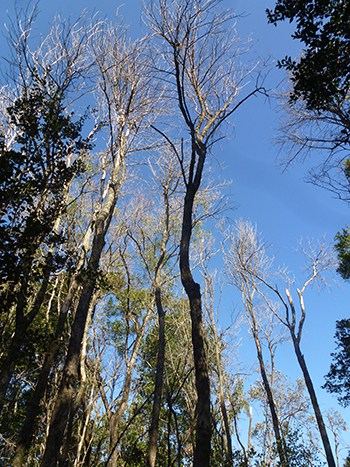
Image below: Dead Native Guava trees at Bongil Bongil National Park, NSW, 2013, only three years after the arrival of Myrtle Rust. In recent surveys in NSW and QLD, no adult trees remain of this once common rainforest plant. Credit Peter Entwistle