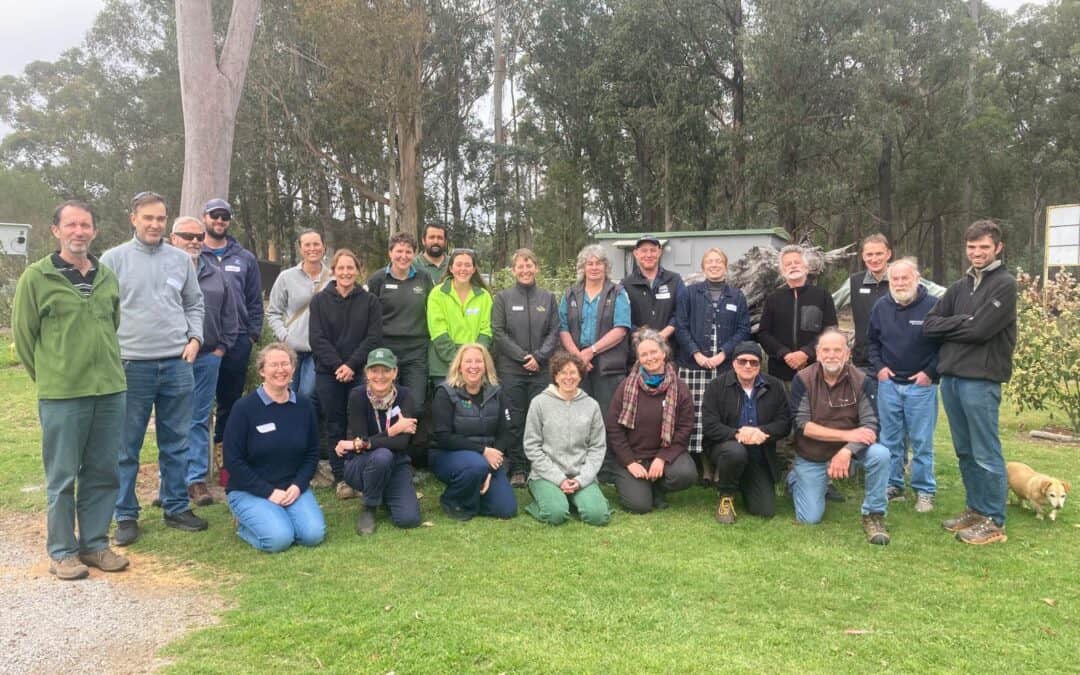
Over August and September 2026, Plant Conservation Australia brought together people working in threatened plant conservation for two workshops in Orbost and Horsham, as part of the Preventing Extinction of Victoria’s Threatened Flora project. This project is led by the Royal Botanic Gardens Victoria and is reaching its final stages after three years.You can learn more about the project to protect 24 different plant species across eastern and western Victoria here.
The workshops were an opportunity to hear directly from researchers and conservation practitioners about learnings from this research and how they are being translated into action. We heard from researchers at the Royal Botanic Gardens Victoria and La Trobe University about genetics, pollination, seed science, horticulture, propagation, translocation and the role of mycorrhizae and rhizobia in threatened plant conservation. We also heard from Parks Victoria and the Victorian Department of Energy, Environment and Climate Action about the practical realities of conservation on the ground.
In Orbost, the day finished with a visit to Moogji Nursery and learning about Moogji Aboriginal Council’s threatened plant work and we had the chance to see the nursery in action. In Horsham we heard from Elizabeth Mace from Dalki Garinga Native Nursery which is overseen by Barengi Gadjin Land Council about their work in conservation across the region.
Across both workshops, conversations turned to the future: what are the gaps in our knowledge and capacity? Where are the opportunities for collaboration? What action is needed, and how can we better coordinate and resource it?
The discussions highlighted the value of bringing researchers, land managers, Traditional Owners, community conservation groups and others together — because preventing extinction takes more than good science. It takes connection, collaboration and collective action.