Nov 1, 2019 | News
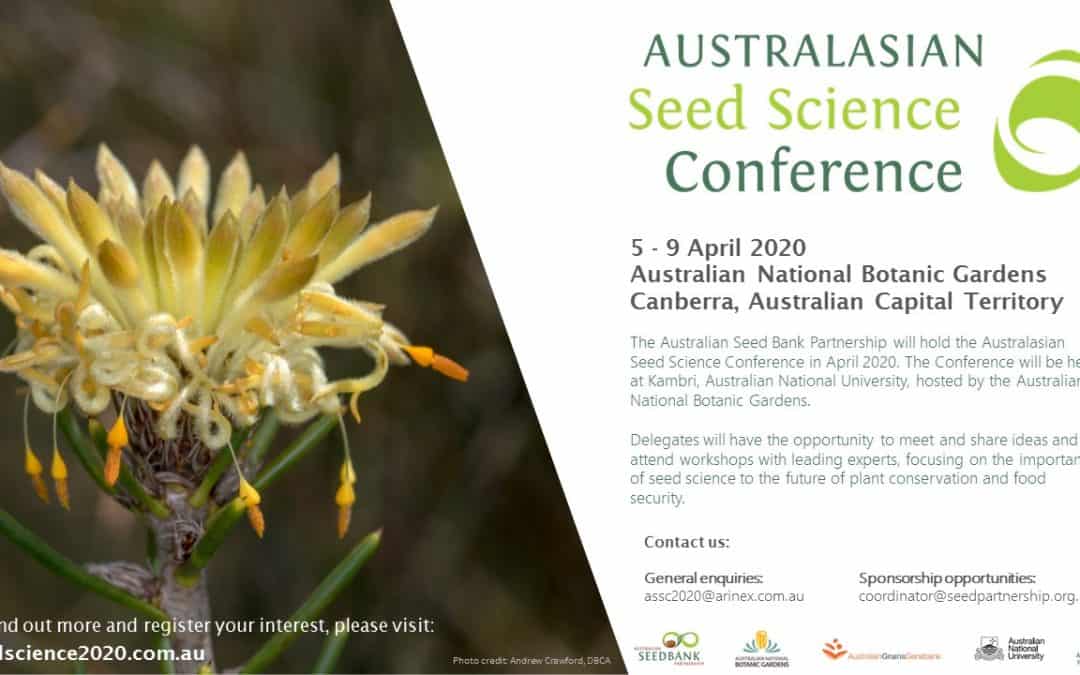
Abstract submissions for ASSC 2020 are open until 5 January 2020. You are invited to submit an abstract for a 15 minute oral presentation or poster presentation. Delegates are encouraged to select the presentation format that best suits the material to be presented. Posters will be displayed through the duration of the Conference, providing you the opportunity to showcase your work and engage in discussions with attendees. ASSC 2020 will be covering the following themes::
- Seed biology and evolutionary ecology – Unlocking the challenges of germination, dormancy and seed ecology in a changing world.
- Seed sourcing and end-use – Considering genetic diversity, restoration and translocations as well as sector specific approaches to seed conservation and use.
- Seed and gene bank management – The ins and outs of managing ex situ seed banks and gene banks and the methods for maximising seed quality and longevity.
- Seeds in culture and society – Sharing stories and learning about cultural seed use, including collaborations between traditional use and ex situ seed banks and gene banks.
Visit the website for more information and to download the abstract template.
Oct 10, 2019 | News
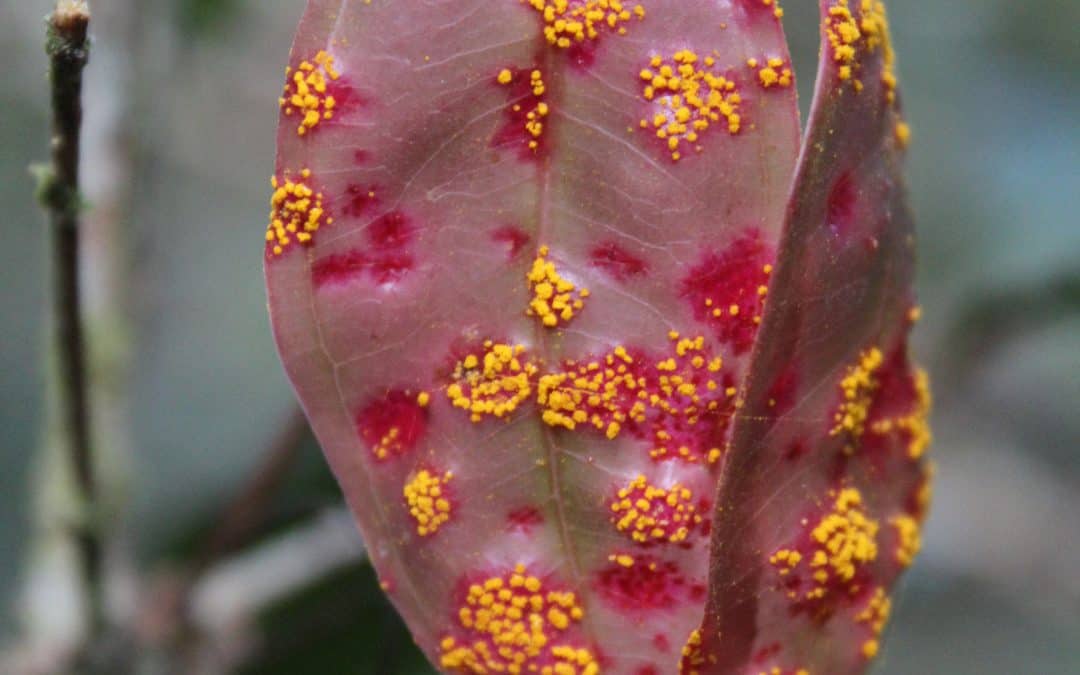
ANPC is proud that our website is the publication point for an updated Global Host List for the plant pathogen Austropuccinia psidii, the causative agent of Myrtle Rust disease, by Julia Soewarto and co-authors. The new Global Host List shows that the host range now stands at 480 nominate species (524 taxa when subspecies are counted separately, as they are in Australian conservation practice). This host range, and the rapid geographic spread of one strain of the pathogen, demonstrate that Myrtle Rust disease is now a major threatening process for the Myrtaceae family on a global scale. The new global host list is downloadable from https://www.anpc.asn.au/myrtle-rust/
For Australian users, be aware that some of the scientific names and ranks (species vs subspecies) on this list differ from current usage in Australia or in some States, as it is based on a master-list of taxa from RBG Kew in the UK (and similar discrepancies may apply to some New Zealand host species). A few undescribed but phrase-named species, fully accepted in Australia, are also omitted for the same reason (e.g. Lenwebbia sp. ‘Main Range’ and Lenwebbia sp. ‘Blackall Range’). This global list in current form also lacks within-Australia distributional information and some Australian conservation-status information. These details, for all except very recent Australian additions to the global list, can be found in Appendix 3 of ‘Myrtle Rust reviewed: the impacts of the invasive pathogen Austropuccinia psidii on the Australian environment’, current to May 2018, which is downloadable from the same web address.
Oct 30, 2019 | Events Category
The Annual General Meeting of the Australian Network for Plant Conservation Inc. (ANPC) will be held on Wednesday 20 November 2019, from 13:00 pm to 14:00 pm (Australian Eastern Daylight-Saving Time) in the Dickson Room, Australian National Botanic Gardens, Clunies Ross St, Acton, 2601. All financial members are encouraged to attend in a voting capacity to ensure we reach a quorum, and to hear about what the ANPC has achieved over the last year. This includes individual members and representatives of organisational members. Please RSVP to the Secretary, Melissa Millar, by Wednesday 13 November 2019. This will greatly assist us in preparing a successful AGM. The draft Agenda is available here.
Nominations are now open for the following positions on the ANPC Inc. Committee of Management:
• President
• Vice-President
• Treasurer
• Ordinary members (7 positions)
Nominees for the above positions must complete the ANPC_Committee_Nomination_Form_2019. Nominations must specify the position being sought. For clarification of the duties of the positions, or of the membership status of nominees or nominators, please contact the Secretary well before the deadline. Nominations must be received by the Secretary at least seven days before the AGM, i.e. by close of business on Wednesday 13 November 2019. Nominations may be emailed to the Secretary, or faxed to the ANPC at 02 6250 9599, or mailed to The Secretary, ANPC Inc., GPO Box 1777 Canberra ACT 2601. Nominees need to be nominated and seconded by two (2) members of the Network and these can be submitted separately if required.
Nov 1, 2019 | News
The Priority List recently issued by The Commonwealth Department of Agriculture is a significant step in the slow process of building greater awareness and capacity for Australia’s environmental biosecurity. The public comment period for the list, advertised in our last issue, has now closed, but the list remains available at here pending its finalisation. The ANPC’s submission on the exposure draft (30 September 2019) is available here. The ANPC is looking to bring members concerned about environmental biosecurity issues into closer contact with each other, to give us greater capacity on this side of our work. If you are interested in networking on this, please email the office with subject line ‘Enviro biosecurity’.
Sep 30, 2019 | News
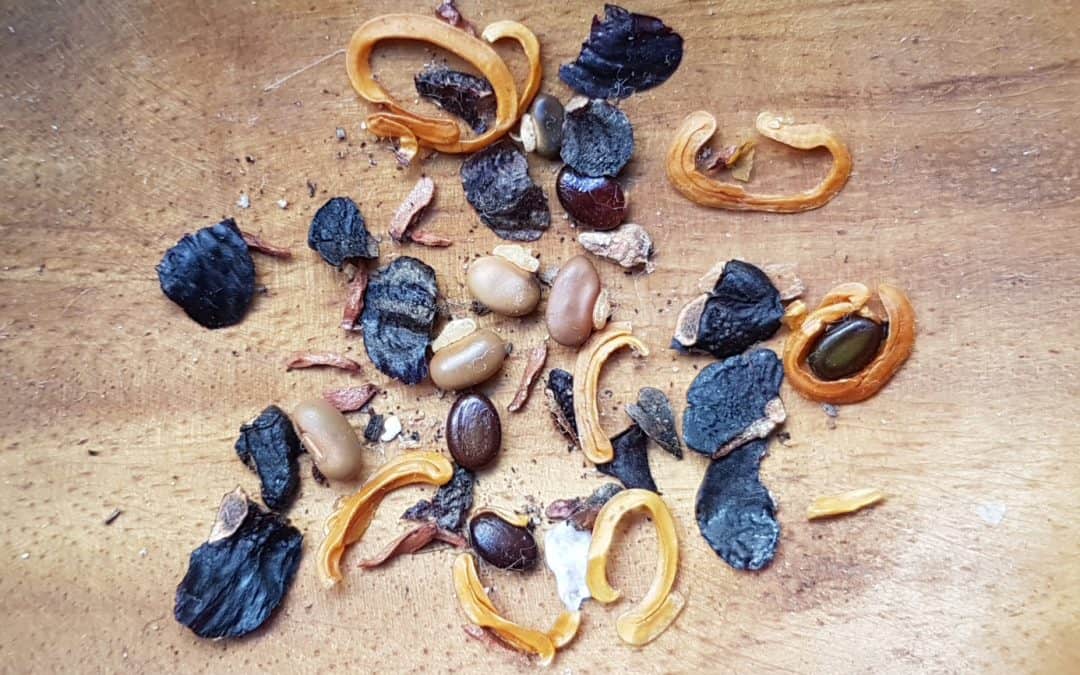
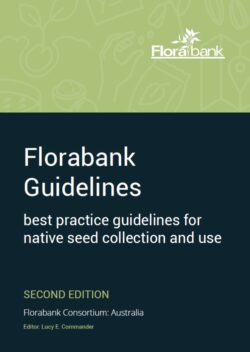
We are very excited to announce that the ANPC has embarked on the 18 month ‘Healthy Seeds’ project funded by the NSW Government through its Environmental Trust, to deliver an evidence-based Roadmap to secure a reliable, genetically-appropriate, native seed supply in NSW for restoration, and to update the Florabank Guidelines for best practice native seed collection and use. An audit and investigation into past and present Seed Production Areas (SPAs) will also be undertaken. A consortium of partners will be established across the native seed and ecological restoration sectors to oversee the project.
SPAs are seen as central to overcoming shortfalls in high quality native seed for ecological restoration, and for improving seed supply reliability, reducing pressure on wild populations, and for improving genetic provenance and diversity to ensure the long-term health and resilience of restored ecosystems. The Florabank Guidelines, first developed in 1999 in partnership between Greening Australia, CSIRO, and Bushcare, will be revised and updated with the latest science. These guidelines remain the benchmark for best practice native seed collection and use in restoration and are widely used by practitioners – the closest thing to an industry standard that is currently available. Read more.