Nov 29, 2019 | News
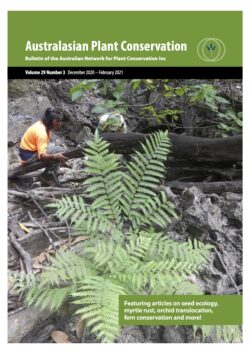
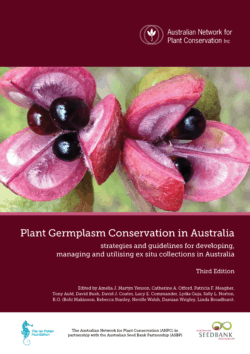
Need a Christmas present for someone who cares about our native plants? Just complete our Gift Membership Form and email it back to this email. They will receive four editions of Australasian Plant Conservation per calendar year as well as discounts to our workshops and conferences. You can also elect for them to receive the FREE e-version of Plant Germplasm Conservation in Australia and/or subscribe to Ecological Management and Restoration! Your gift will help contribute to plant conservation in Australia. We couldn’t achieve all we do without our members! Don’t forget you can also organise your membership renewal, if necessary, by clicking on the link above. Thank you! Download the form here.
Nov 14, 2019 | News
Communique from the NSW restoration industry
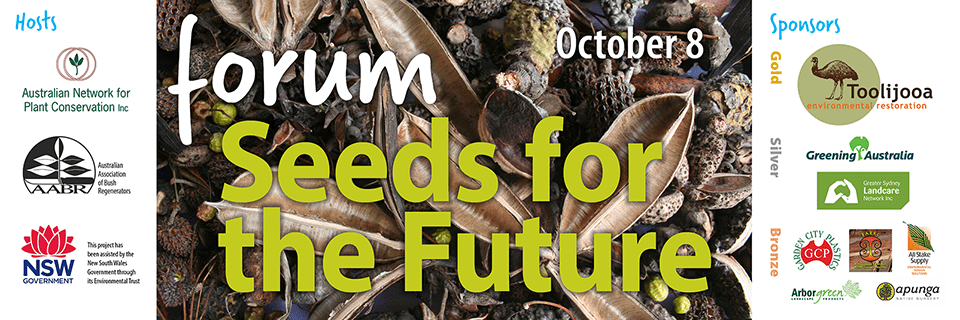
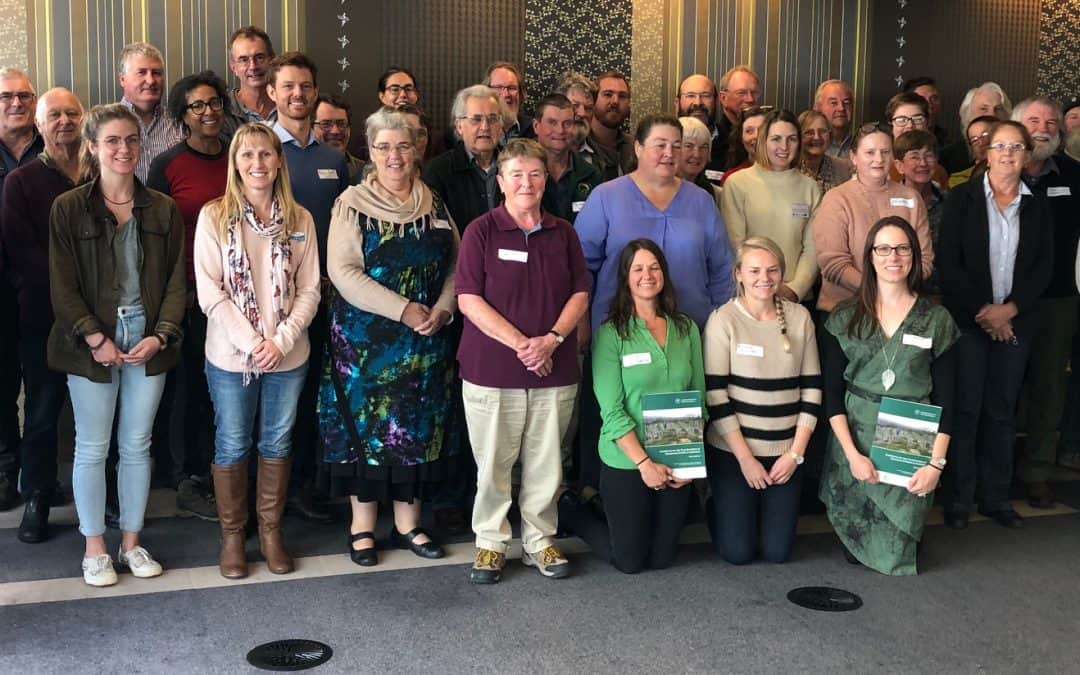
AABR / ANPC – ‘Seeds for the Future’ Forum –
Oct 8, 2019, Sydney, Teacher’s Federation Auditorium
The ecological restoration industry is small but critical to the future of biodiverse native ecosystems in Australia, ecosystems that are essential to our nation’s clean water, functional soils and carbon capture and storage. Great strides have been made in developing successful methodologies for restoring complex ecosystems using a combination of assisted regeneration and reconstruction techniques.
Barriers exist, however, to the necessary expansion of the industry if it is to make a difference to biodiversity conservation. One critical barrier is the time lag required to collect and supply the seed required for restoration which is almost always longer than the short lead times for funding contracts. A second barrier is the wildly fluctuating demand for seed due to either dry years or the chance occurrence of large developments which impacts on the viability of many organisations or operators.
There is a need for more sustained drivers for the seed and restoration industry. Market demand needs to reach a larger scale to make it economically viable for suppliers to risk investment in seed collection and storage or cultivated seed production. Investment in seed production is required to reduce pressure from harvest from self-sustaining natural systems, increasing harvest volumes and efficiencies and managing genetic diversity of supply.
The primary current driver for restoration is for work required as a result of development consents (e.g., mining and urban development). More ambitious incentives for diverse ecosystem restoration for its own sake are required, as well as the necessary planning to ensure investment in appropriate physical and organisational infrastructure.
The Forum calls upon State and Federal governments to direct incentive funding to biodiversity restoration and the infrastructure required to support it, whether solely for conservation, as a co-benefit for developing more sustainable farming systems, better managed transport corridors, meeting carbon emission reductions, soil and water security or generating employment and community wellbeing.
With the increase in demand for restoration will come drivers for improvements to restoration training, native seed collection permitting and regulation, increased development of seed production farms and the establishment of standards for high quality seed supply.
As bureaucratic barriers to these improvements exist, the Forum calls upon agencies at all levels of government across Australia to work with industry and non-profit restoration organisations to streamline solutions in these areas.
Find out more about the Forum and download the program here.
Nov 1, 2019 | News
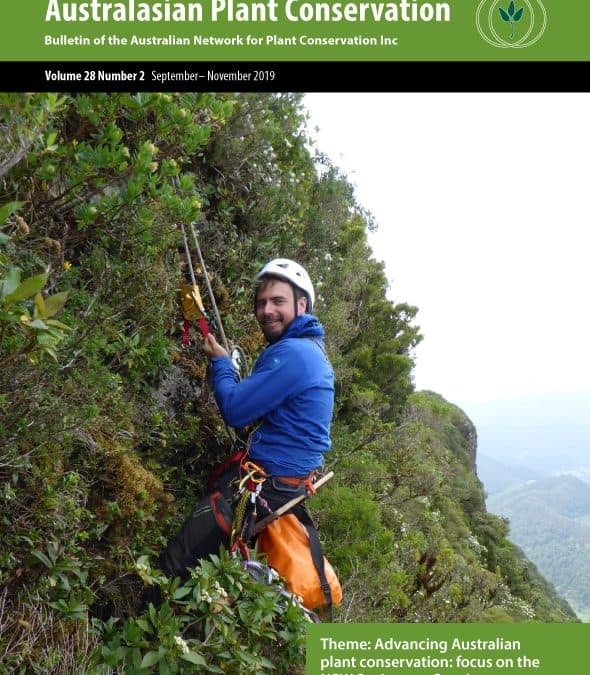
You will receive the Winter 2019 edition with the theme of translocation of threatened plants, and the Spring edition which focuses on the NSW Saving our Species program. ANPC membership entitles you to discounts and benefits including: subscription to four (4) editions of Australasian Plant Conservation; discounts to ANPC workshops, conferences and forums; and discounted subscription to Ecological Management and Restoration. Complete the ANPC membership form here. Some of our high priority projects for 2020 include:
Nov 1, 2019 | News
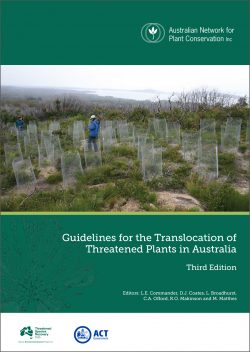
The ANPC is available to run workshops to showcase the new information in the latest Plant Translocation Guidelines. Based on the recently published 3rd edition of the ANPC’s ‘Guidelines for the Translocation of Threatened Plants in Australia’, translocation workshops provide a step by step guide on how to translocate plants. ANPC Project Manager Dr Lucy Commander, lead editor of the 3rd edition, is available to coordinate and lead Translocation Workshops anywhere in Australia. Three successful workshops have already been held in Canberra (Nov 2018), Perth (March 2019) and Adelaide (May 2019). The ANPC would welcome the opportunity to present a plant translocation workshop in your region. Registration fees depend on the amount of funding available (either from an institution or a successful grant application) to cover such expenses as catering, venue hire and ANPC staff time and travel. Please contact the ANPC’s Business Manager, Jo Lynch, for further information and request a quote, or to collaborate on a grant application. Read more.
Nov 1, 2019 | News
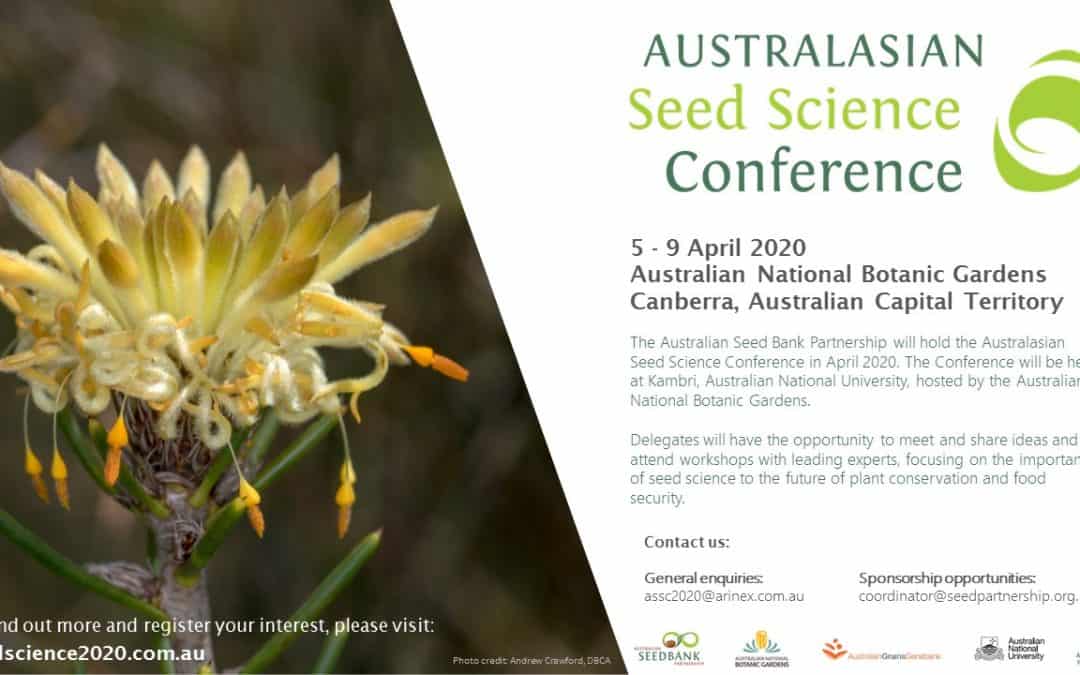
Abstract submissions for ASSC 2020 are open until 5 January 2020. You are invited to submit an abstract for a 15 minute oral presentation or poster presentation. Delegates are encouraged to select the presentation format that best suits the material to be presented. Posters will be displayed through the duration of the Conference, providing you the opportunity to showcase your work and engage in discussions with attendees. ASSC 2020 will be covering the following themes::
- Seed biology and evolutionary ecology – Unlocking the challenges of germination, dormancy and seed ecology in a changing world.
- Seed sourcing and end-use – Considering genetic diversity, restoration and translocations as well as sector specific approaches to seed conservation and use.
- Seed and gene bank management – The ins and outs of managing ex situ seed banks and gene banks and the methods for maximising seed quality and longevity.
- Seeds in culture and society – Sharing stories and learning about cultural seed use, including collaborations between traditional use and ex situ seed banks and gene banks.
Visit the website for more information and to download the abstract template.
Oct 10, 2019 | News
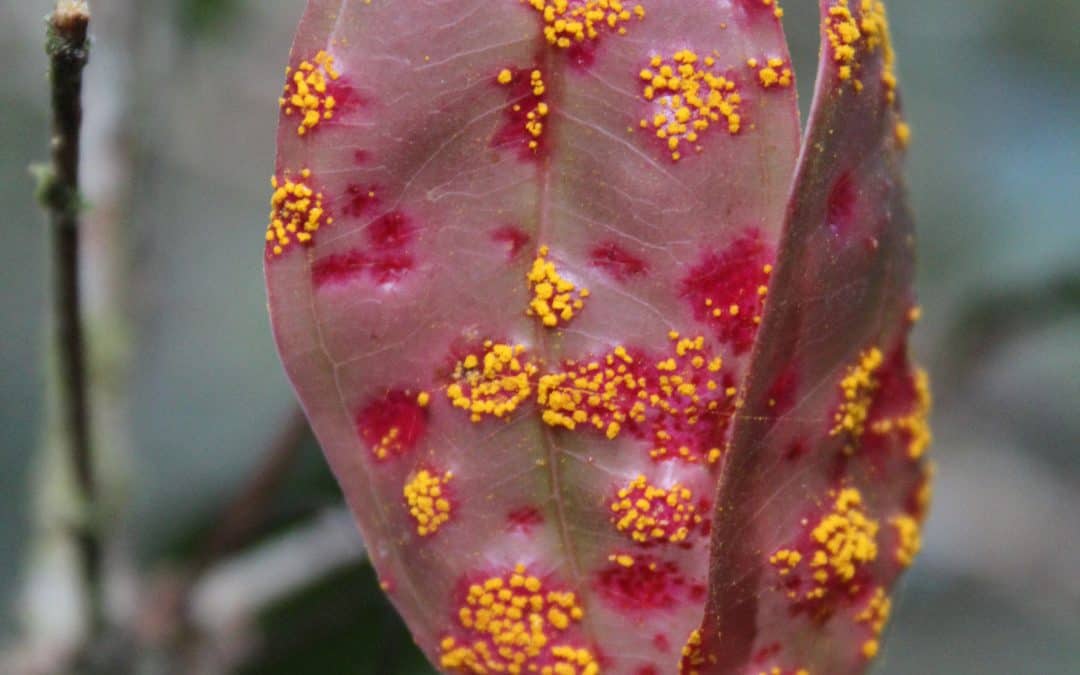
ANPC is proud that our website is the publication point for an updated Global Host List for the plant pathogen Austropuccinia psidii, the causative agent of Myrtle Rust disease, by Julia Soewarto and co-authors. The new Global Host List shows that the host range now stands at 480 nominate species (524 taxa when subspecies are counted separately, as they are in Australian conservation practice). This host range, and the rapid geographic spread of one strain of the pathogen, demonstrate that Myrtle Rust disease is now a major threatening process for the Myrtaceae family on a global scale. The new global host list is downloadable from https://www.anpc.asn.au/myrtle-rust/
For Australian users, be aware that some of the scientific names and ranks (species vs subspecies) on this list differ from current usage in Australia or in some States, as it is based on a master-list of taxa from RBG Kew in the UK (and similar discrepancies may apply to some New Zealand host species). A few undescribed but phrase-named species, fully accepted in Australia, are also omitted for the same reason (e.g. Lenwebbia sp. ‘Main Range’ and Lenwebbia sp. ‘Blackall Range’). This global list in current form also lacks within-Australia distributional information and some Australian conservation-status information. These details, for all except very recent Australian additions to the global list, can be found in Appendix 3 of ‘Myrtle Rust reviewed: the impacts of the invasive pathogen Austropuccinia psidii on the Australian environment’, current to May 2018, which is downloadable from the same web address.