Aug 20, 2026 | News
Introducing our newest staff member – Dr Jules Freeman! Jules is the new Recovery Action Coordinator for Plant Conservation Australia’s Myrtle Rust program and is leading the development of a draft resistance breeding strategy for Myrtle Rust-impacted species.
Jules is a research scientist specialising in plant genetics, with expertise spanning genomics, quantitative genetics and the genetic basis of trait variation in native and production forests. Over more than two decades, he has undertaken research across Australia and New Zealand, ranging from fundamental genetics to breeding approaches for forest and native tree species.
Since 2012, Jules has contributed to research on Myrtle Rust (Austropuccinia psidii), investigating the genetic basis of host resistance and assessing resistance breeding options for threatened and ecologically important Myrtaceae. He has collaborated with government agencies, research organisations and other partners on initiatives spanning conservation, biosecurity and forest health.
At Plant Conservation Australia, Jules will work with government agencies, researchers, botanic gardens and conservation partners to support coordinated recovery efforts for Myrtle Rust-affected species. For those attending APCC15, Jules will be presenting on Tuesday afternoon with a talk titled: “From genetic variation to resistance breeding: lessons from myrtle rust in Australia and New Zealand”.
Apr 30, 2026 | News
Plant Conservation Australia has put together a submission on the consultation for the NEBRA review.
In it, we argued that there needs to be more consultation with relevant stakeholders in the not-for-profit, volunteer or NRM sector when an incursion takes place, despite these interested parties often having to bear the brunt of much of the response once a pest has become established. We also pointed out the inadequacy of the current arrangements where the EADRA, EPPRD take preference over NEBRA as soon as there is any impacts on industry. This in our view does not provide a suitable model for when there are plant pest incursions which primarily impact the natural environment, with some industry impacts, as has occurred in the past. We also argue that the current maximum dollar value response limit of $5 mil to incursions of environmental pest incursions is insufficient when compared to industry wide responses under different arrangements.
Read the full Plant Conservation Australia submission here (pdf link).
We have also endorsed the Invasive Species Council’s submission on the review, which applies many similar critiques of NEBRA. You can read their submission here: https://invasives.org.au/publications/national-environmental-biosecurity-response-agreement-5-year-review/
Apr 23, 2026 | News
Last month, Plant Conservation Australia provided a submission to the ACT Government on their Draft Nature Conservation Strategy. In it, we commended the Nature Positive and cross-tenure approach set out by the Strategy, but expressed concerns over some of the timeframes set out, as well as a few instances where ambiguous language and targets could give opportunity for justification of a lack of conservation action. We also argued for this strategy to be fully resourced, pointing to the decline in many indicators for the health of our ecosystems noted in the 2023 State of the Environment Report.
You can read the submission here.
Image: View of Canberra city from Mt Ainslie – Credit: Richie Southerton
Apr 17, 2026 | Events Category, News
Early bird registration for Australasia’s premier plant conservation conference, APCC15, is now open! To register fill in the form here: https://www.anpc.asn.au/apcc15-early-bird-registration-form/
The conference will be held at the Port Douglas Community Hall in the stunning Queensland Wet Tropics from 24-28 August 2026.
With the overall theme ‘Plant Conservation: Culture, Collaboration and Change’ APCC15 will explore these three spheres of native plant recovery through rainforest restoration partnerships, collaborations with Traditional Owner groups, impacts of climate change induced natural disasters, management of threatened species and communities, and biosecurity threats such as Myrtle Rust.
The conference will bring together from across the continent, people researching, working, or volunteering in plant conservation to address the challenges facing Australasia’s spectacular and diverse plant life, through information exchange and sharing best practice approaches. There will also be numerous workshops, social events and field trip options, which you can find more by clicking here to visit the conference webpage.
The early bird discount ends 29 May.
Abstract submission is also open! The themes are: Sustaining Diversity, Restoring Balance, Collaborations and Culture and Biosecurity, Invasive Threats and Post-invasion Challenges
The abstract submission form can be found here (word doc). The submission deadline is 1 May.
We’re looking forward to seeing you there!
Feb 25, 2026 | News
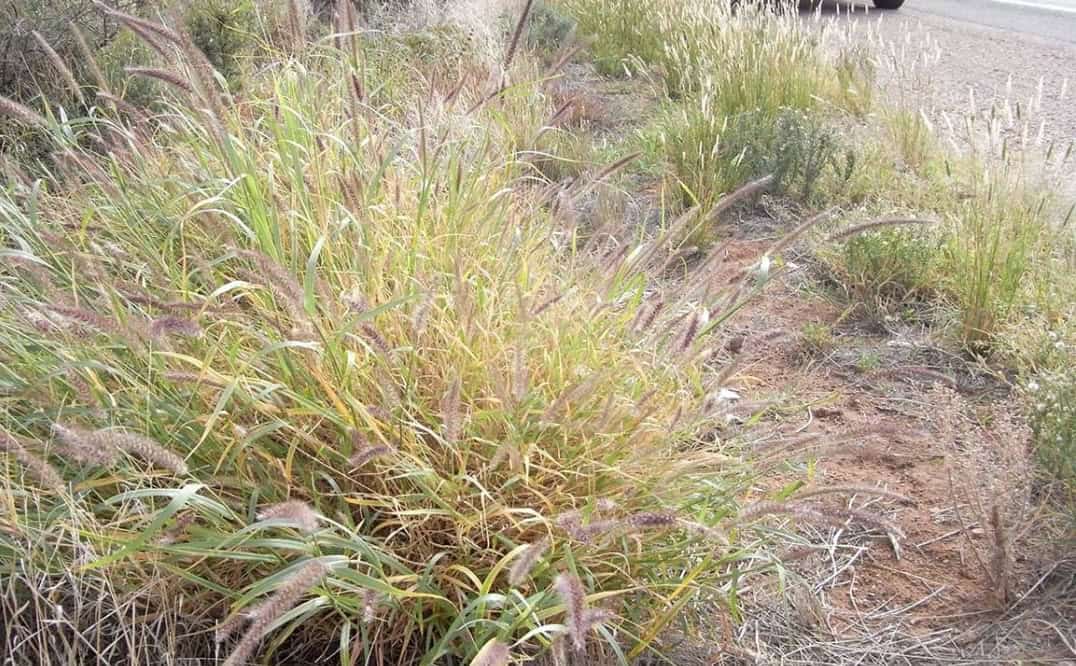
Earlier this month, Plant Conservation Australia put forward a submission on the draft Northern Territory Buffel Grass Weed Management Plan 2026-2036. To summarise, we echoed the concerns of the Central Land Council and the Invasive Species Council, and endorsed the recommendations put forth by the Invasive Species Council in their submission.
You can view the submission here.
Image credit: PIRSA
Jan 29, 2026 | News
We’re pleased to announce Caitlin Griffith as our new Project Manager for Victoria! Caitlin has over 25 years’ experience working across nature conservation, community engagement and leadership. Her background spans on-ground conservation, plant surveys and ecological monitoring, alongside advocacy, citizen science and program development.
Caitlin loves working at the interface of science, community and land management—designing education resources, running workshops with scientists and practitioners, and supporting advocacy for habitat protection. She is passionate about making ecological knowledge accessible and empowering communities to take action for nature.
Caitlin has always had a passion for watching wildflowers emerge with a particular love for the showy pea flowers and orchids.
She holds a Bachelor of Science in Conservation Biology and Ecology and a Graduate Certificate in Social Ecology.
Caitlin will be coordinating two one-day workshops on threatened flora conservation – one in Horsham on Wednesday 19 August and one in Orbost on Wednesday 2 September 2026 – as well as a two-day Victorian threatened flora conservation conference planned for Melbourne in November, as part of the “Preventing the extinction of Victoria’s threatened flora” project.